Golf etiquette is the set of unwritten rules that let everyone enjoy the round: staying quiet while someone plays a shot, keeping a brisk pace and leaving the course as you found it. It isn’t a stuffy dress code or a way of deciding who belongs and who doesn’t. It is, quite simply, respect: for your playing partner, for the group behind you, and for the ground beneath your feet. At La Roca Golf, 30 minutes from Barcelona, that etiquette comes naturally, without any solemnity.
One distinction is worth making from the start: the rules of golf govern what you may do with the ball (where you drop, when you’re penalised); etiquette governs how you behave while you play. This guide is about the second.
The essentials in 20 seconds:
- Silence and stillness: while someone plays, don’t talk or move within their line of sight
- Pace of play: play without rushing but without dawdling; if you’re slow, let the group behind through
- Look after the course: rake the bunker, repair your pitch mark on the green and replace your divot on the fairway
- Safety: never play a shot if anyone could be within reach of your ball
Etiquette isn’t about snobbery (it’s about respect)
Let’s dismantle the myth first. Plenty of people picture golf as a world of rigid codes where a newcomer makes a fool of themselves on the first tee. The truth is the opposite: etiquette exists so that everyone can play comfortably, not to shut anyone out. Every custom has a practical reason behind it, not a pose.
Silence over the ball? Because a golf shot demands pinpoint concentration, and a badly timed noise breaks it. Repairing your pitch mark? Because the next player deserves a smooth green, just as you do. Letting a faster group through? Because nobody enjoys playing in a hurry or waiting forever. Etiquette is common sense turned into habit, and you’ll pick it up in two rounds.
At a club with an amateur, open spirit like La Roca, nobody is going to look down on you for not knowing everything on day one. What counts is your attitude: a willingness to learn and to respect. That’s within anyone’s reach from the very first minute.
Silence, stillness and turns: etiquette with your playing partners
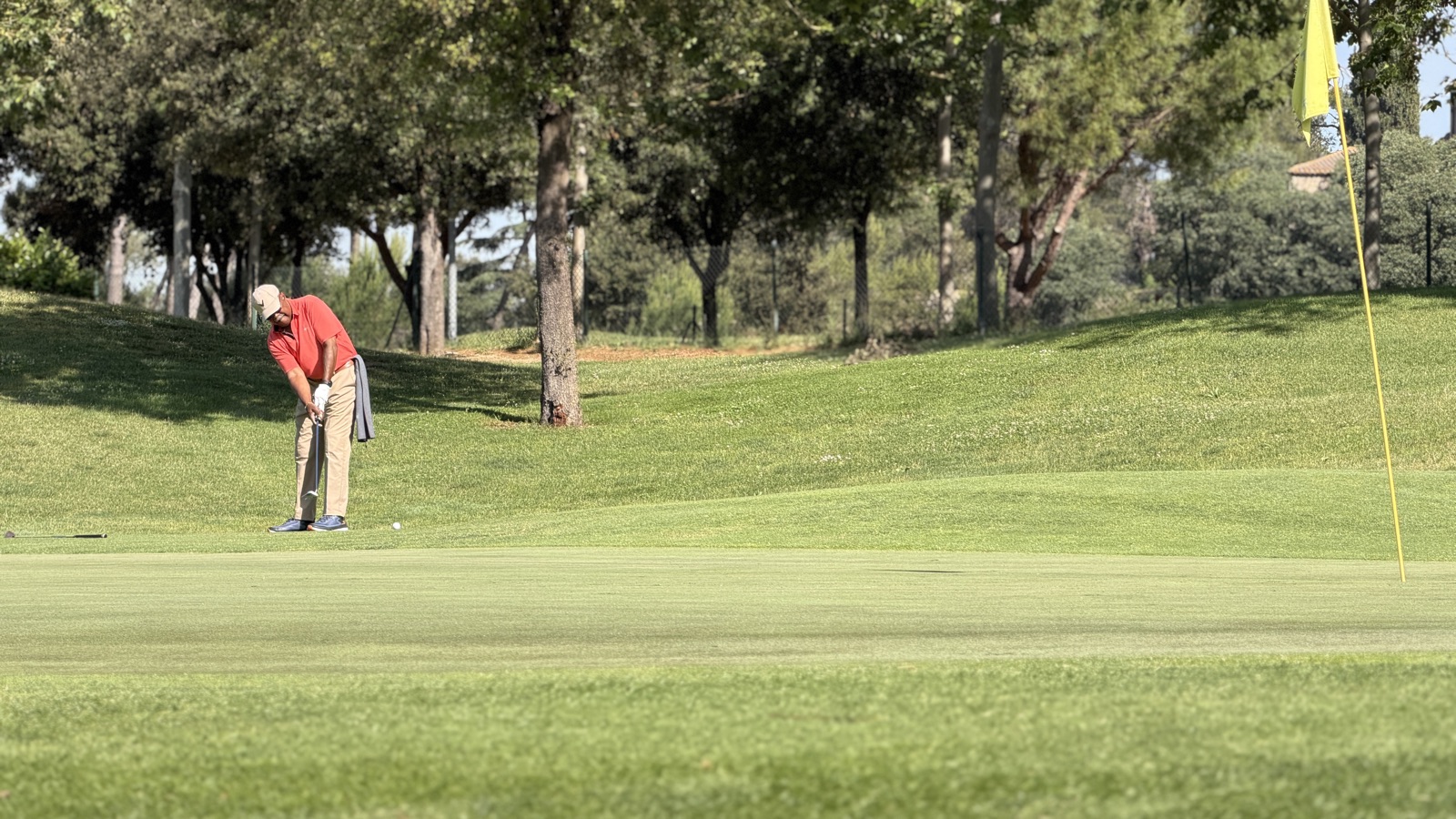
The first layer of etiquette is towards the people you share the round with. It boils down to not disturbing others while they play their shot. In practice:
- Silence and stillness during the shot. No talking, no whispering, no moving within the striker’s line of sight. Wait until the ball is on its way.
- Respect the order of play. The player furthest from the hole usually goes first, though among friends this relaxes into “ready golf” (whoever is ready plays, to keep things moving).
- Don’t step on the putting line. On the green, avoid walking across the imaginary line between your partner’s ball and the hole: your footprints affect how the ball rolls.
- Mind your shadow. When someone is putting, keep your shadow off their ball and off the hole; it’s more distracting than it looks.
None of this is hard. It’s the same courtesy you’d apply to any shared activity, adapted to a game that rewards concentration.
Pace of play: the rule everyone appreciates most
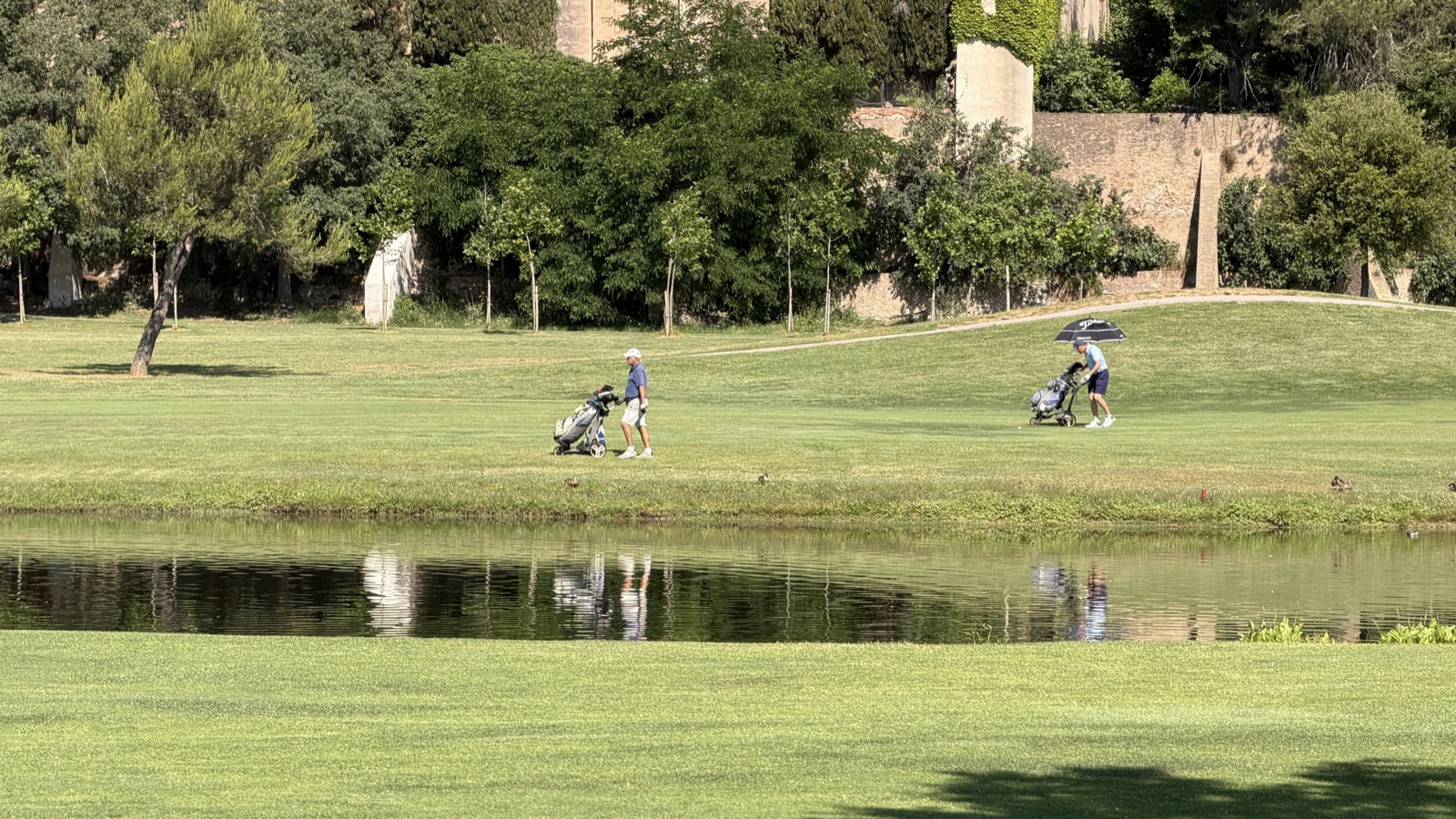
If you had to keep just one rule of etiquette, it would be this: play at a good pace. A course flows when every group moves along without dawdling, and it jams up when someone falls behind. Keeping pace doesn’t mean rushing, it means being ready when your turn comes.
A few habits that make all the difference:
- Get ready while you wait. Think through your shot and pick your club before it’s your turn, not after.
- Keep pace with the group ahead, not your distance from the group behind. If there’s a gap opening in front of you, you’re going slowly.
- Let others through when you should. If your group is slower and the one behind is right on your heels, wave them through. It’s no humiliation, it’s courtesy, and everyone appreciates it.
- At La Roca this comes naturally: the course is flat, open and gives a clear view from tee to green, so play flows briskly, without the waits that make other courses so frustrating.
Good pace is the gift you give the rest of the course. And oddly enough, you play better: with no endless dead time, the round keeps its energy.
Caring for the course: rake, pitch mark and divot
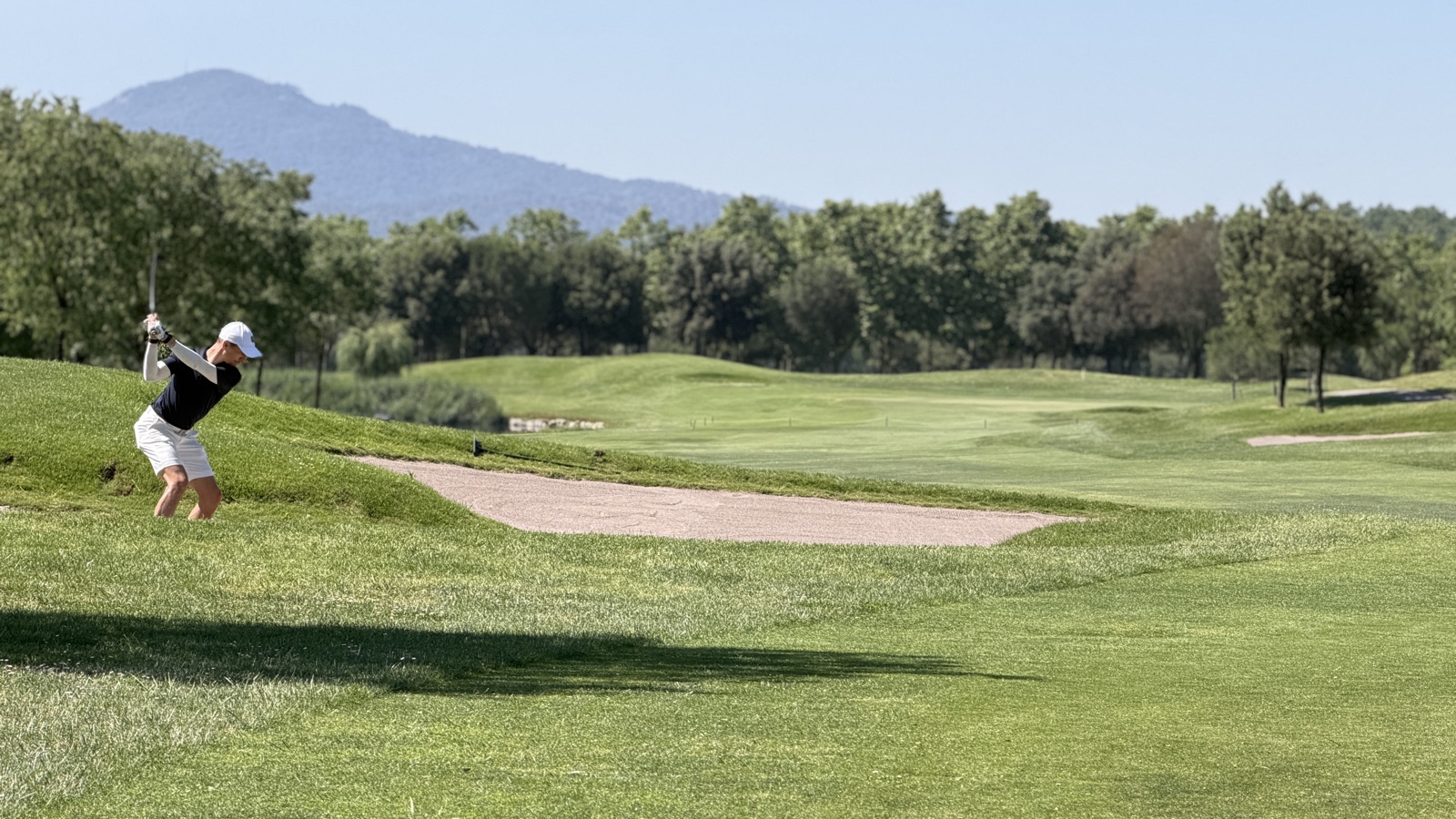
The third layer of etiquette is towards the ground itself. A golf course is a living thing tended by many hands, and leaving it as you found it is part of the game. Three gestures every player should make automatic:
- Rake the bunker. After playing out of the sand, grab the rake and smooth away your footprints and the mark of your shot. The next player to find that bunker shouldn’t pay for your visit.
- Repair your pitch mark on the green. When a ball lands on the green it leaves a small dent (the “pitch mark”). A repair tool or a tee lifts the sunken turf in seconds. A well-kept green is everyone’s job.
- Replace your divot. If your shot on the fairway tears out a piece of turf, pick it up and press it back into place, or fill the scar with the sand many courses provide.
At La Roca, where attention to detail and care for the surroundings are part of the club’s DNA, these gestures fit in naturally: looking after the course means looking after what makes the experience special. It costs nothing and changes everything.
Safety: the etiquette that isn’t negotiable
There’s one part of etiquette that goes beyond courtesy: never play a shot if someone could be within reach of your ball. A golf ball travels fast and hits hard. Before every shot, check that the fairway is clear ahead.
And if your ball still flies off towards an area with people, shout “fore!” nice and loud. It’s the universal signal for anyone nearby to protect their head. There’s no embarrassment in shouting; the embarrassment is in staying quiet. Safety is the one chapter of etiquette where there’s no room to relax.
Etiquette at La Roca Golf: learning by playing
At La Roca Golf, etiquette isn’t taught from a stern manual: it rubs off as you play. The club breathes an accessible, welcoming brand of amateur golf, so a beginner finds the perfect setting to pick up the customs without pressure. Regular players rake, repair and step aside because it’s part of enjoying the course, not because anyone is watching.
If you’re just starting out and want to build the habit from the beginning, the easiest way is to do it in good company. A golf taster session or your first lessons with a La Roca Academy coach put you on the course with someone who points out the small gestures at exactly the right moment. And once you have your handicap and play full rounds, etiquette comes to you on its own: it has become part of how you play.
Frequently asked questions about golf etiquette
What’s the difference between the rules and the etiquette of golf?
The rules govern the game itself: what you may do with the ball, when you’re penalised, how you keep score. Etiquette governs the behaviour around the game: silence, pace, care for the course and safety. You can break etiquette without breaking a single rule, but you’ll annoy everyone playing with you.
Does etiquette require a specific dress code?
Not in the rigid sense many people imagine. Each club has its own guidance on comfortable, sporty clothing, but real etiquette isn’t about fashion or exclusivity: it’s about respect, pace and caring for the course. At an open club like La Roca, what matters is playing comfortably and with a good attitude.
What matters most if I’m a beginner?
Three things: stay quiet when someone else is playing, keep pace (and let others through if you’re slow) and look after the course (rake, pitch mark and divot). Do that and you’re already playing with etiquette. The rest comes with the rounds.
What does shouting “fore” mean?
It’s the universal safety warning. If your ball flies off towards an area with people, you shout “fore!” so they can protect themselves. It’s every player’s duty and you should never hesitate to use it.
Can I learn etiquette before I can even play?
Yes, and it’s the best time to. Etiquette is picked up during your first rounds, playing alongside someone who shows you as you go. A taster session or introductory lessons at La Roca Academy include these gestures as a natural part of learning.
Play with respect and the course gives it back
Golf etiquette isn’t a test of good manners or a filter to sort people out. It’s what lets four strangers share four hours of play and leave the course wanting to come back. Silence, pace and care: three simple ideas that fit anyone.
Want to take your first swings at a club where etiquette is learned by enjoying yourself? Discover the options and rates on the services and rates page or ask La Roca Golf directly: we’ll help you start off on the right foot.
Written by the La Roca Golf team.