Beginner golf equipment fits into half a bag: one wood or hybrid, three irons (a 7, a 9 and a sand wedge), a putter, a glove, shoes with decent grip and a dozen balls. That is it. The rules let you carry up to fourteen clubs, but while you are learning, more clubs does not mean better shots: it means more hesitation before every one of them. And there is something worth saying before anything else: you do not need to buy a thing to get started.
The essentials in 20 seconds
- You do not need to buy clubs for your first few weeks. La Roca Golf has rental bags, and equipment is included in taster sessions and beginner courses.
- Half a bag is enough: wood or hybrid, 7 and 9 irons, sand wedge and putter. Five clubs cover almost every situation a beginner will face.
- What does matter from day one: a glove on the hand opposite your dominant arm, shoes with grip, and two-piece balls (cheap ones, because you will lose them).
- Fitting comes later, once your swing settles. Before that, tuning a club to a motion that still changes every week achieves very little.
Before buying anything, try borrowed gear
Most beginners buy far too soon. It is understandable: you get excited, you walk into a shop, you see a full set at a good price and out it goes with you. The problem is that at that point you still do not know how high your ball flies, whether you tend to open or close the clubface, or whether golf will grab you at all.
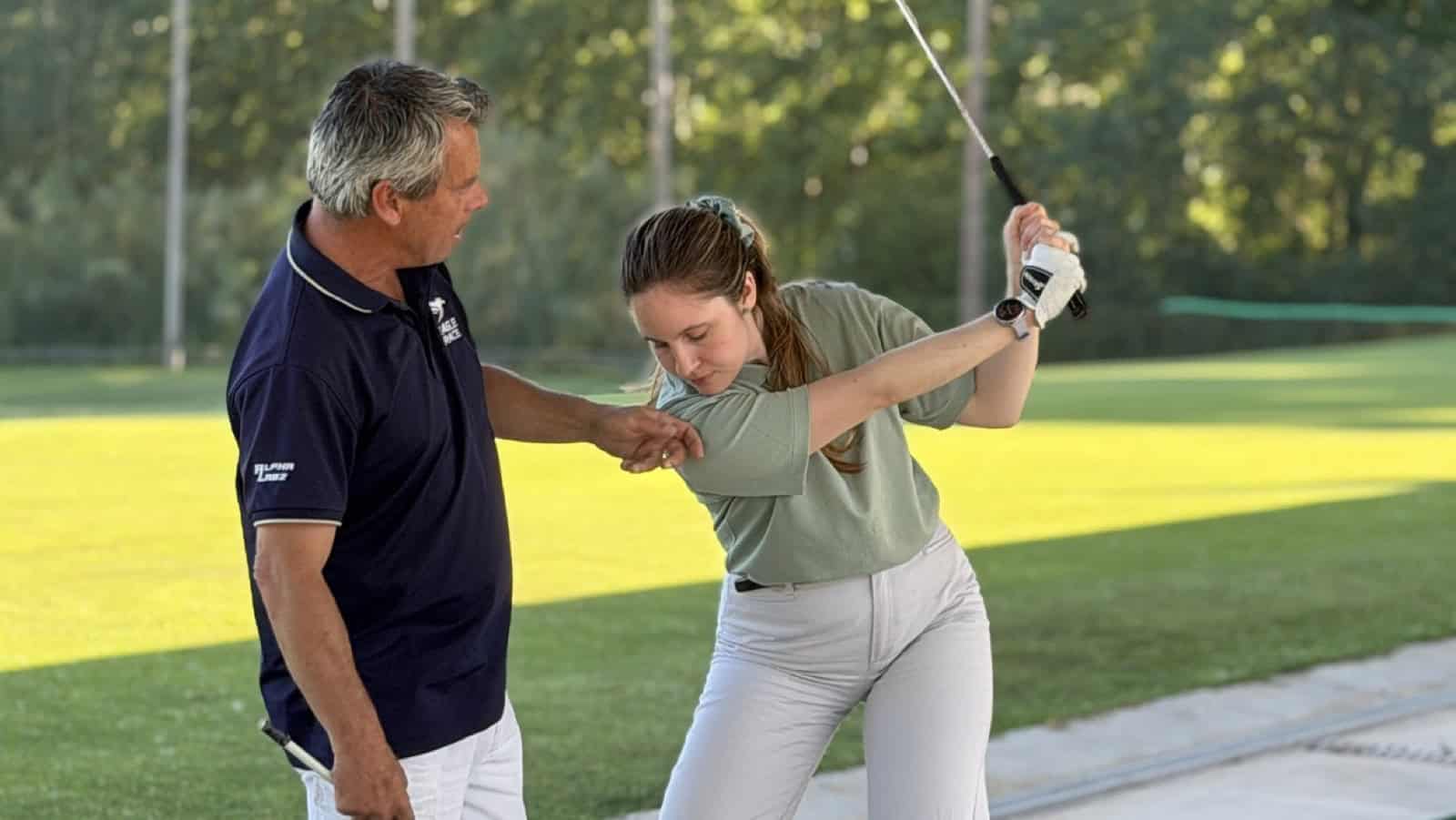
So the sensible order is the other way round. At La Roca Golf we have rental bags for your first sessions, and both the golf taster session and the beginner golf course include the equipment: clubs, glove and balls. All you need to bring is comfortable clothing and trainers.
Those first hours at the training centre are worth more than any buying advice. You walk away knowing which club feels natural, which one gives you trouble and how far your ball really travels, which is almost never what you imagined.
The clubs: what a beginner’s bag really holds
The 14-club rule, and why it does not apply to you
The rules of golf allow a maximum of fourteen clubs per round. That is a ceiling, not a target. A seasoned club player fills the bag because they can tell the difference between a 5 and a 6 iron; a beginner cannot yet, and carrying fourteen options only stretches the decision before every shot. If you want to go over the rest of the rulebook before your first round, the basic rules of golf give you the full picture.
The recommended half set
These five clubs cover practically everything you will run into:
- 3 wood or hybrid. For your tee shot and long shots. The hybrid is more forgiving than a long wood and many beginners handle it better.
- 7 iron. The learning club. It has enough loft to get the ball up without demanding a perfect strike, and it is the one most coaches use to start building a swing.
- 9 iron. For mid-range approach shots, the ones where the flag is already in sight. Exact distance depends on your swing speed, so do not measure yourself against anyone: learn your own.
- Sand wedge. For getting out of bunkers and for short shots around the green.
- Putter. The club you will use more than any other in your golfing life and, oddly enough, the one nobody looks at closely when buying.
Notice what is missing: the driver. It is the longest club, the hardest to control and the one that causes the most frustration early on. It will come, but it does not have to come on day one.
Shaft and length: where fitting genuinely matters
Two things about a club affect your shot more than the brand: shaft flex and length. A shaft that is too stiff for your swing speed leaves the ball low and to the right; one that is too soft sends it high and unruly. And a club that is too long or too short forces you to change your posture to compensate, so you end up grooving a motion you will later have to undo.
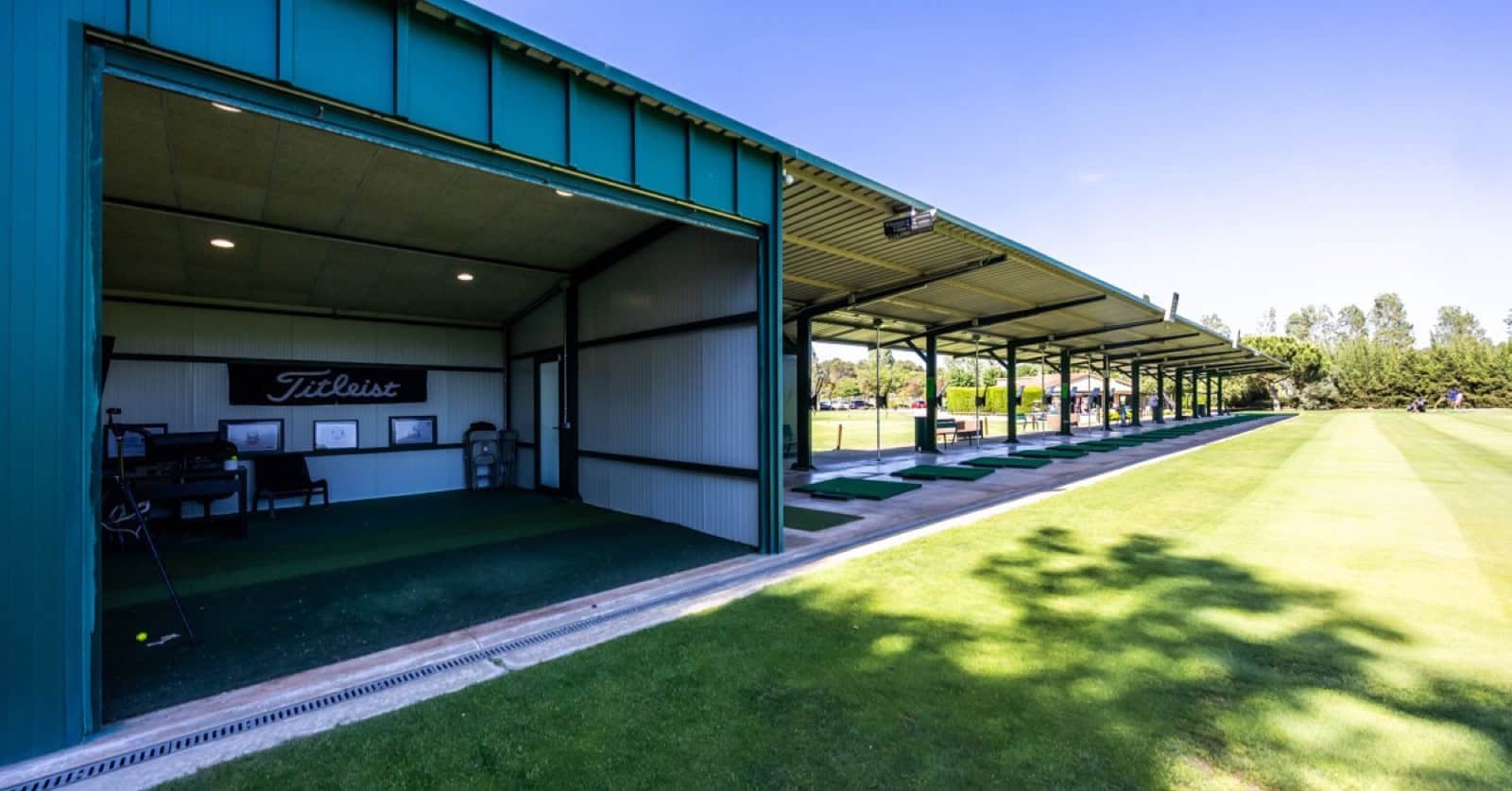
In the Swing Lab at La Roca Golf we work with Trackman 4, the same analysis technology the professionals use, and we offer fitting and clubmaking: advice, club testing, repairs and custom-built clubs. The time to come in is not your first day, but once you have a few months behind you and your strike starts repeating. By then the numbers say something stable about you, and adjusting your gear makes sense.
What you do need from day one
Beyond the clubs, the list is short and inexpensive:
- Glove. Worn on the hand opposite your dominant arm (left hand if you are right-handed). It prevents blisters and improves grip, especially when your hand sweats in summer.
- Shoes. You do not need spiked golf shoes to begin. Trainers with a sole that grips work perfectly well for the training centre and your first rounds.
- Two-piece balls. You will lose them, and that is fine. Buy a box of beginner balls and forget about it: high-compression balls are designed for swing speeds you do not have yet.
- Ball marker and tees. They cost very little and always end up being needed. Plastic tees last longer than wooden ones.
- Comfortable clothes. A polo shirt and sports trousers or a skirt. Nothing more is required at La Roca.
What can wait
This is where money tends to go unnecessarily:
- Driver. Once you control the 7 iron and the wood, not before.
- Specialist wedges (gap, lob). The sand wedge will serve you well for a long while.
- Rangefinder or GPS. Useful, but secondary while your problem is contact with the ball rather than exact distance.
- Electric trolley. Walking the round is part of the sport and its benefits. You can decide later.
- Large tour bag. A lightweight carry bag weighs half as much and is more than enough for half a set.
New or second-hand
For a first set, the second-hand market is a reasonable option, with two caveats. First: check the state of the grips, the only part of the club you actually touch and the part that hardens with age. Replacing them is cheap and transforms how an old club feels. Second: make sure the shaft suits your profile, because many second-hand sets come with the stiff shaft of an experienced player.
If you would rather buy new, complete beginner sets usually already include the selection above, and they are more than adequate to start. Steer clear of tour-level sets: they are expensive, built for highly repeatable strikes, and they will not make you improve any faster.
What to pack the day you go out on the course
A quick list for your first round:
- The clubs (half a bag is plenty)
- A glove, plus a spare if your hands sweat
- Half a dozen balls and a few tees
- Ball marker and pitchmark repairer
- Water and something to eat during the round
- Cap and sunscreen, especially from May to September
Every green fee at La Roca Golf includes a locker with a security code, so the rest of your belongings stay safe while you play.
Frequently asked questions about beginner golf equipment
How many clubs does a beginner need?
Five is enough: a wood or hybrid, a 7 iron, a 9 iron, a sand wedge and a putter. The rules allow fourteen, but that figure is a ceiling, not a recommendation for someone starting out.
Do I have to buy clubs for my first lessons?
No. Equipment is included in taster sessions and beginner courses at La Roca Golf Academy, and there are also rental bags if you want to practise on your own at the training centre.
When is a fitting worth doing?
Once your strike starts repeating with some consistency, usually after a few months of regular practice. Before that, the data varies so much from session to session that any adjustment is quickly outgrown.
Are ordinary trainers fine to play in?
For the training centre and your first rounds, yes, as long as they grip well. Dedicated golf shoes add stability through the turn, and they are a purchase that makes sense once you play regularly.
Which balls should I use when starting out?
Two-piece beginner balls. They are the cheapest, they fly well at moderate swing speeds and, since a few will go missing early on, your wallet will thank you.
Start your journey at La Roca Golf
The best thing about beginner golf equipment is that the part that matters cannot be bought: it is learned. And that happens with a club in your hand, out on the course, with someone showing you how to use it. If you want to take the first step without investing in gear, come and try: at La Roca Golf, 30 minutes from Barcelona, we have the equipment ready and the Academy with its GASPS method to guide you from your very first shot.
See our services and rates and book your first session.